Do I Have Poly-B? How to Tell and What to Do About It
Poly-B was installed in many BC homes from the mid-1980s to the late 1990s. If your house was built or replumbed in those years, it's worth five minutes to check.
Request a plumberWhere to look
Start near the hot water tank, where pipes come in and out of the top. Then look under kitchen and bathroom sinks, behind the washing machine and in any unfinished basement or crawl space where pipes are exposed.
What it looks like
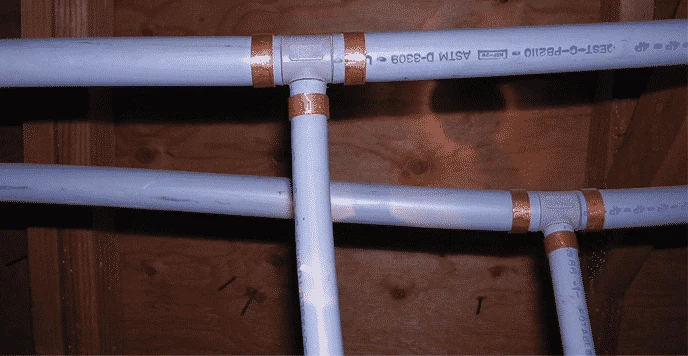
Grey, flexible plastic pipe, usually about the width of a finger, joined with grey plastic or copper crimp fittings. Printing along the pipe often includes PB2110.
What it isn't
White or coloured PEX (often red and blue) and white or cream CPVC are modern pipes. Copper is shiny or brown metal. Black plastic pipe outside is usually irrigation or a water service line, not Poly-B.
Why it matters
Poly-B and its fittings can become brittle with age and fail without warning. Many insurers ask whether a home has it, and some charge more, limit coverage or decline to insure until it's replaced.
Your options
Replace it all at once, or in stages starting with the most exposed sections near the hot water tank. Talk to your insurer first so the plan meets what they require.
Next steps
A plumber can confirm what you have and quote a replacement. See Poly-B replacement and repiping.
Telling your insurer
If you find Poly-B, tell your insurer at renewal rather than waiting for a claim. Ask what they need to see after replacement, such as an invoice listing the work and the permit number.
More plumbing guides
Plumbing trouble in Greater Victoria?
Send a request and a plumber will get in touch. Requests answered 7 days a week.
Prefer email? [email protected]